Using AI and Digital Tools in Content Creation

Today’s post is going to be a little different. I won’t be referencing a song in this presentation. Instead, I wanted to talk for a bit—maybe even ramble a little—about how I use digital tools and AI in the content I post online.

I’m not here to argue whether these tools are right or wrong, whether everyone should use them, or how much they should be used. My goal is much simpler: transparency. I want to be clear about how I use these tools in my content creation.

A computer chip with the letter ia printed on it
Photo by Igor Omilaev on Unsplash

In the end digital tools and AI are amoral and have no ethics. While the developers can program some bias, it is the user who brings the morality and ethics. And like all of God’s gifts, they can be used or abused.

Fire is good for light, warmth and the absolute best way to cook a steak and other meats. Used irresponsibly or maliciously and it is destructive.

God gave people wisdom to take various elements around us and create medicines that relieve pain, cure disease and improve quality of life. Used carelessly or maliciously they create addiction, pain and even death.

God gives us sex for both pleasure and procreation within marriage. But used outside its design leads to confusion and other problems.

And digital tools, in the end, their benefit or danger is in the hands of the user.

If you want the “too long; didn’t read” version, here it is:

I use digital tools and AI to fill gaps where I lack certain skills, resources, or time.

Before I go any further, I want to clarify something up front. When I refer to AI, I’m usually talking about ChatGPT and Copilot. I’m not sponsored by them, and I’m not endorsing them—they just happen to be the tools I default to.


Likewise, I use Fender Studio Pro, various plug-ins, and Canva, simply because those are the main platforms I use.

I also use OBS to record video and DaVinci Resolve to edit video/audio to create the video.

And I use Logos Bible Software.

Also, everything I’m about to share applies only to my social media and creative content—not how I might use these tools in my day job or in areas like Bible study or sermon preparation.

Music Production

The first area I want to talk about is music creation, because this has the biggest impact on my YouTube channel, Common Man Guitar. That’s where I post original instrumental music alongside my content.

I play guitar, and by default that means I can play some bass as well. So any guitar—and most bass—you hear in my recordings is me playing those instruments. I write the music, and I play the parts.

Sometimes I record through a pedalboard into an amplifier that’s mic’d and then routed into my recording software. More often, though, I plug directly into my interface and record straight into the software.

I use multitracking, just like musicians have been doing since Les Paul developed it back in the 1940’s.

I might record multiple guitar tracks and pan them left and right, each with slightly different tones. Sometimes I’ll add a subtle part in the center just to fill out the sound. I use pedals and plugins to simulate different amps and effects, but the playing itself is mine.

For other instruments, I use a MIDI keyboard controller connected directly to my recording software. I know enough music theory to play melody lines and basic chords, and then I experiment with the software to determine what instrument those notes sound like. One part might end up as a saxophone, another as a pad, a Hammond B3, or a piano.

If you’ve ever worked with recording software, you know you can spend days auditioning sounds—from orchestras and choirs to bird chirps and car crashes. I keep it simple. I choose basic instruments that let me add a melody or hook to support the song. Again, I’m playing the notes I wrote—the software is just capturing and shaping them.

Drums and Percussion

This is where things are completely digital.

I am not a drummer. I don’t play drums. I don’t own drums. I struggle to keep time, and while a metronome is great for practicing strumming or picking technique, it doesn’t work well for me when I’m writing and recording songs.

Inside my recording software, I use drum plugins and instruments. I drag and drop patterns to create basic drum tracks for verses, choruses, intros, outros, and bridges as I arrange the song. These drums are samples and loops—I select them, arrange them, and build a track, but I don’t play the parts myself.

Once the drum track is in place, I record everything else with it.

So when it comes to music production, these digital tools aren’t replacing my creativity or playing—they’re filling in gaps where I don’t have the tools.

Graphics

Another area where I use AI and digital tools is graphics, primarily for YouTube thumbnails.

When I can, I’ll jump into Canva and build something myself—choosing backgrounds, images, and layouts. Other times, I’ll use an AI tool to help generate ideas. I’ll describe what I’m trying to create, and the AI will suggest colors, fonts, layouts or images. Sometimes I’ll even ask it to generate an image.

For example, I recently posted a video and song based on Judas and Jesus in the Garden of Gethsemane. I prompted the AI with the theme, title, and overall idea. It gave me suggestions for color schemes, fonts, and imagery. From there, I generated an image and then tweaked it—adjusting details where the characters didn’t quite look right.

I use AI here because I’m not a graphic designer, and I’m not at a point where I can hire one. My daughter designed the logo for the YouTube channel, but that was a one-time thing—I can’t have her doing all my graphics.

I also use digital tools when I need slides for a video—things like end screens, “subscribe” prompts, quotes, or Bible verses. Canva and Logos Bible Software both make that pretty easy.

For Substack or my website, I usually stick with stock or public-domain images that fit the theme of what I’m writing.

Again, this is about filling gaps where I don’t have the skills or resources to do everything myself.

Editing

This is the last area I want to cover.

I write my scripts. I write my posts. Just like I write my songs. In most cases, the text is the same whether it’s for the YouTube script, Substack, or my website—though I might tweak it slightly for spoken delivery.

After I’ve written everything, I’ll sometimes use AI for research and verification, especially when I want to make sure I have facts or references correct. Logos Bible Software, for example, helps me find verses and understand context. In the Judas post, I used it to confirm where Judas is referred to as the “son of perdition” and how that term is used in context.

Once the content is written, I’ll paste it into an AI tool and ask it to check for spelling, grammar, and typos. I may also ask it to make the text more conversational, more professional, or more impactful.

Just like I did for this post.

Then—and this part is important—I compare the edited version to my original. Sometimes the AI nails it. Other times, I’ll read something and think, Anyone who knows me knows I don’t talk like that. When that happens, I put my original wording back in.

I’ve also noticed that AI will occasionally leave out something I consider important. When that happens, I make sure it gets added back in.

At the end of the day, this is still my message, my point, and my voice. The AI is just helping me polish it.

Conclusion

That’s really it. That’s how I use digital tools and AI in my social media content, presentations, and posts.

The work is mine—the ideas, the writing, the playing. These tools simply help me fill gaps in skills and resources. I don’t have an editor, a graphic designer, a producer, or an engineer. It’s just me, my guitar, my laptop, and a few additional tools like pedals and a keyboard.

And the digital tools.

I’ll admit, the temptation is always there to let AI write a song or generate content based on a theme or genre. But I don’t do that. I want this to be my message, presented in a way that’s accurate, coherent, understandable, and hopefully helpful.

I’m not recommending that you do things my way. I’m not saying my way is the best or the only way. You may use these tools far more extensively—and that’s your choice. You may avoid them entirely—and that’s fine too. It’s your message and your voice.

For me, transparency matters. I think it’s important to acknowledge where and how these tools are used. This idea was inspired by an interview where Joe Bonamassa and Ian Scott I think mentioned that concert tickets should disclose how much of a performance is prerecorded or tracks. I actually agree with that idea.

I’ll be doing another post soon about the human/digital connection in content creation and creativity. That comes from a comment by Joe Walsh about how the computer/digital process strips away the human connection, the mojo of the music when it is sanitized and perfected to remove all the human presence,

I want to be able to say: This is my voice. This is my message. This is my song. And yes, I used tools to fill in some gaps.

I’d love to hear from you—drop a comment and let me know how you use AI or digital tools. Do you use them extensively? Do you just dabble? Or are you completely opposed to them, and why?

And while you’re at it, hit the like and subscribe buttons—they really do help. You’ll also find affiliate links in the description for things like Amazon or Cable Free Guitar. Those commissions go right back into supporting my platforms with no additional cost to you, and I truly appreciate it.

However you approach these tools, remember:

Create. Don’t just copy.

Posted in Article, Uncategorized | Tagged , , , , , , , | Leave a comment

Jesus, Judas, and Us

This post didn’t start out the way I planned.

I had an idea forming, but between work, life, and distractions, it never quite came together. I made some progress, but I wasn’t confident in the direction—so I was late getting it finished.

Then, sitting in church this morning, everything changed.

The sermon was from Matthew 26, focusing on the betrayal of Jesus by Judas. When the pastor reached Judas’ kiss, something struck me with fresh weight:
Judas is not just a villain in the story—we see ourselves in him.

WE all know Judas. But what if the real danger is not in being betrayed, but being the betrayer.

So often when we talk about Judas, the focus is on how we can be betrayed by people close to us. But Scripture presses us to look deeper—to ask how we, too, are capable of betraying the God of the universe.

Judas Had Every Advantage

Judas wasn’t an outsider.

He was invited into Jesus’ closest friends. He walked with Christ. He heard Jesus’s words firsthand. He listened as Jesus said:

Judas saw and heard everything

  • “Blessed are the poor in spirit.”
  • “Come to Me, all who are weary and heavy laden, and I will give you rest.”
  • “I am the way, the truth, and the life.”

Judas saw the blind receive sight.
He watched demons flee.
He felt the boat steady as the storm was silenced.
He saw Lazarus walk out of the grave.

And yet—something was off.

Maybe Jesus didn’t meet Judas’ expectations.
Maybe the cost of discipleship was too high.
Maybe it wasn’t high enough.

We’re not told.

What we are told is this: for a handful of silver, Judas turned a moment of intimacy into an act of betrayal. A kiss—meant for affection—became an instrument of treachery.

The Graciousness of Christ

One of the most sobering realities in this account is the grace of Jesus.

Jesus knew what Judas would do.
And still—He welcomed him.
He taught him.
He blessed him.
He treated him no differently than the others.

That should stop us in our tracks.

Everyone Wanted Jesus Silenced

When you step back, you see four groups involved in Jesus’ death:

  1. Judas – a close companion
  2. Religious conservatives – the Pharisees
  3. Religious liberals – the Sanhedrin
  4. Secular authorities – the Romans

Different beliefs. Different motivations.
One shared goal: silence Jesus.

Not much has changed.

Some churches abandon the authority of Scripture because Jesus doesn’t align with cultural expectations. Others believe He isn’t strict enough—or that He’s too strict. And many in the secular world wish He would simply disappear altogether.

Yet the irony remains: people work incredibly hard to get rid of someone they claim doesn’t exist.

The Kiss of Death

Judas received countless blessings—yet he saw himself as his own master.

His kiss looked like devotion, but it was hollow. Scripture warns us about this kind of faith—“having the appearance of godliness, but denying its power” (2 Timothy 3:5).

Earlier in that passage Paul speaks of difficult days, people will be lovers of self, lovers of money and a whole list of what looks like today’s news reports. And it says they oppose the truth and disqualify their faith.

This is the danger of hypocrisy:
looking faithful while rejecting the truth, redefining Christ, and hollowing out the gospel.

Judas’ later sorrow was real—but it wasn’t repentance. The apostle Paul speaks of a sorrow that does not lead to repentance. Feeling bad is not the same as being transformed.

The Judas in Us

This is where the story turns uncomfortably personal.

  • We’ve received forgiveness—but refuse to forgive others.
  • We’ve been accepted by God—but withhold acceptance from those we dislike.
  • We’ve received generously—yet resist giving sacrificially.

We enjoy the blessings of God while resisting His authority.

The sin that ultimately condemned Judas wasn’t the kiss.
It wasn’t the betrayal itself.
It was refusing to believe—to receive mercy—to trust Christ for salvation.

Mercy Still Speaks

Here is the good news:
our betrayal does not have to be the final word.

No matter how deep the failure, God’s mercy is greater.

During Lent as Christians reflect on Christ’s Passion (suffering), we’re reminded not only how painful our sin is—but how far Jesus was willing to go to redeem sinners.

What then shall we say to these things? If God is for us, who can be against us? 32 He who did not spare his own Son but gave him up for us all, how will he not also with him graciously give us all things? 33 Who shall bring any charge against God’s elect? It is God who justifies. 34 Who is to condemn? Christ Jesus is the one who died—more than that, who was raised—who is at the right hand of God, who indeed is interceding for us. 35 Who shall separate us from the love of Christ? Shall tribulation, or distress, or persecution, or famine, or nakedness, or danger, or sword?[1]

“If God is for us, who can be against us?”

Christ was not spared—so that mercy could be offered freely to all who repent and believe.

The question Judas leaves us with is simple—and urgent:
Will we receive Christ, or merely remain close to Him?

“We all know Judas. But what if the real danger isn’t being betrayed… it’s being the betrayer?


Judas saw everything. He heard everything. He walked with Jesus. And yet—he never truly believed.

That should terrify us.

You can be close to Jesus.
You can know the language.
You can enjoy the benefits.
And still miss the gospel entirely.
We redefine Jesus. We soften His words. We ignore obedience—while still enjoying His blessings.

That’s Judas-like faith.

The issue was never access.
It was never knowledge.
It was a heart that refused to submit in faith.

Salvation is not proximity to Christ—it’s union with Christ.


[1] The Holy Bible: English Standard Version (Ro 8:31–35). (2025). Crossway Bibles.

Posted in Article, Uncategorized | Tagged , , , , , , , , | Leave a comment

Where Did We Get Music?

The current image has no alternative text. The file name is: a-guitar-and-a-bible.png

Zamar (Hebrew for music)

There is a video version of this with an original song at http://www.youtube.com\@commonmanguitar

Music Is God’s Idea

Where did music come from?

When you really stop and think about it, music has been with humanity for as long as we can tell. As far back as recorded history goes, people have been making music. Archaeologists have found bone flutes in Germany that date back nearly 10,000 years. Around 5000 BC, there are references to aulos—double‑reed pipes. By 2000 BC, we’re already seeing lutes show up in history.

Music has always been part of the human story.

And in modern times, Kiss famously sang, “God gave rock and roll to you.”
That song was originally written by Argent in 1973 and later covered by Petra in 1977.

And honestly—that’s where I want to start.

Music is God’s idea.

If you’re new here, my name is Bob. This is Common Man Faith, where I share my faith, my music, and sometimes a few other random thoughts along the way.

**********************************************************************************

When we open the Bible, the first clear reference to music shows up in Genesis 4. It tells us that Jubal was the father of all who play the lyre and the pipe.

But it may go back even earlier than that. In Genesis 2, when Adam speaks about Eve, many scholars believe his words are poetic—possibly even song‑like. In the book of Job, we’re told that the sons of God (spiritual beings, angels) sang at creation. In Exodus 15, Miriam leads the people in song after God delivers the Hebrews from Egyptian slavery.

Music shows up again and again.

Joshua’s army blew trumpets and the walls of Jericho fell. David appointed musicians to serve in the tabernacle. And then, of course, there’s the book of Psalms—the songbook of the Bible.

There are NT references telling us to encourage one another with Psalms, Hymns, and Spiritual songs

So the question becomes: why did God give us music?

Music Expresses Emotion

The Psalms cover the full range of human experience: sorrow, joy, brokenness, fear, trust, anger, lament, and praise.

In fact, the book of Psalms alone contains at least 50 direct commands to sing. Music isn’t optional—it’s commanded.

We’re told to sing a new song.
To sing of God’s works and His mercies.
To “sing to the Lord” and “make a joyful noise to the rock of our salvation.”
Play skillfully on the strings.

Trumpets and cymbals which are not quiet instruments so God I guess likes loud music.

Throughout history, others have recognized this power as well. Beethoven once said, “Music is a higher revelation than all wisdom and philosophy.” He believed music communicates when words fail.

Franz Liszt said, “Music begins where the possibilities of language end.”

And that rings true, doesn’t it? We are made in the image of God, and God made us with emotions—with depth and feeling. Sometimes our joy is so overwhelming that words fall short. Sometimes our grief runs so deep that language just isn’t enough.

But melody, harmony, and rhythm step in where words fail. Minor chords think of sorrow and lament. Major chords are power and joy.

Music gathers all of that emotion and gives it expression.

That’s why music is a gift from God for worship.
It’s a gift from God for expressing emotion.

Music is Powerful as a Teaching Tool.

Think about it—how many things did you learn through music? You learned the alphabet with The ABCs. You can learn the Periodic Table with a songs about the elements. Even the “12 Days of Christmas.”

Some believe it was used to teach Scripture to children

One God.
Two Testaments.
Three pillars of Faith Hope Love
Four Gospels.
Five books of Moses.
Six days of creation
Seven gifts of the Holy Spirit
Eight beatitudes
Nine fruits of the spirit
Ten Commandments.
Eleven Faithful apostles
Twelve tribes of Israel or 12 points of the apostles creed

Martin Luther believed music was one of the best ways to teach theology. Compare the language of those early hymns to todays modern music. That’s why so many hymns were written in four‑part harmony—not just to worship, but to teach doctrine and even help people learn to read music and sing.

Music Defines Culture

Songs are how cultures preserve their identity, values, and their history. Not just social culture but church culture.

From national anthems to protest songs, music tells us who people are. Plato once said, “If you want to know a people, listen to their music.” And in 1704, Scottish politician Andrew Fletcher famously said, “Let me write the songs of a nation; I care not who writes its laws.”

Music shapes hearts. Declares our values, our priorities, our loves. Even the things we rail against.

So far, I have said that music is used to worship.
It’s used to express emotion
It’s used to teach.
It helps define a culture and a community

But there’s one more thing—among many others.

God Uses Music to Express How He Feels About His People.

In Zephaniah 3, we read these words:
Sing aloud, O daughter of Zion; shout, O Israel!
Rejoice and exult with all your heart, O daughter of Jerusalem!
The Lord has taken away the judgments against you; he has cleared away your enemies.

The King of Israel, the Lord, is in your midst; you shall never again fear evil.
On that day it shall be said to Jerusalem: “Fear not, O Zion; let not your hands grow weak.
 The Lord your God is in your midst, a mighty one who will save;

And then listen to what He says

He will rejoice over you with gladness; he will quiet you by his love; He will exult over you with loud singing.[1]

Not only does God receive our worship in song.

He sings over His people with joy. When God looks at His covenant people He sings, He rejoices

Think about that. Not only does God receive our worship in song—He sings over His people with joy.

So let’s go back to where we started.

Music is God’s idea.
Music is God’s gift.
And God Himself sings.

And remember—you were made in the image of God. You were made to sing.
You were made to create.

So don’t just copy.
Enjoy what others have created.
But also find ways to create yourself—as an expression of worship, faith, and gratitude.

Your joy, your grief, your longings. Find the songs, or write the songs, that help you express them

If this resonated with you, like and subscribe.
But more than that—leave a comment.

What has music meant to you?
What has music helped you get through?
Was there a song—something you wrote or something someone else wrote—that showed up at exactly the right moment?

I’d love to hear your story.

Create, and enjoy what others have created too.


[1] The Holy Bible: English Standard Version (Zep 3:14–17). (2025). Crossway Bibles.

Posted in Uncategorized | Leave a comment

MasterPeace

Christ the Lord of Peace, Creating a Masterpiece

Peace is hard to find these days.

I once read a statistic from a New York Times article published in 2003 that said this:
Out of the last 3,400 years of recorded history, humanity has been entirely at peace for only 268 years—about 8% of the time. In that study, “war” was defined as any conflict resulting in more than 1,000 deaths.

Now, there has been debate about the accuracy of those numbers and how peace or war should be defined. But even with debate, one thing is clear: human history is overwhelmingly marked by conflict. For most of recorded time, peace has been the exception—not the rule.

So today, I want to talk about peace.
Not the absence of conflict.
Not a temporary calm.
But something deeper. Something biblical.

What Kind of Peace Are We Talking About?

Recently, Scotty Ward Smith published a short article—or really, a prayer—in his daily post Heavenward. It asks a piercing question:

Who—or what—rules your heart?

That article reminds us that when Christ rules our hearts, He rules with peace—a peace that guards our hearts and minds.

So let me define what I mean when I say peace.

I’m talking about peace in the biblical sense.

“Now may the Lord of peace himself give you peace at all times in every way.”
—2 Thessalonians 3:16

“And let the peace of Christ rule in your hearts.”
—Colossians 3:15

Biblical peace is not denial. It is not escapism.
It means well‑being, security, and rest under God’s rule.

In the Old Testament, the word is shalom—wholeness, completeness, flourishing. And that peace is always rooted in God’s covenant with His people.

God Never Promised an Easy World

Nowhere does God promise us a life free from conflict, illness, loss, or pain. In fact, Scripture tells us the opposite.

We live in a world that is broken and infected by sin. Jesus Himself told us plainly: “In this world you will have trouble.”

That trouble shows up everywhere:

  • Toil and frustration in our work
  • Broken relationships
  • Confusion over identity
  • Disease and suffering
  • War, violence, and death

But here is what God does promise:

In the storm, He is our shelter.
In the chaos, He is our rock.
In the darkness, He is an ever‑present help.

These things do not have the final word.
They do not get to cancel our peace.

And God assures His covenant people that they will never be lost or forsaken.

Peace Was Secured at Calvary

The clearest proof of that peace was displayed at Calvary.

It was there that this world unleashed its most hideous evil—taking the perfect God‑Man, Jesus Christ, and nailing Him to a cross.

And yet, it was also there that the greatest act of love was displayed.

Jesus willingly laid down His life.
He bore the full weight of our sin.
He absorbed the righteous wrath of God in our place.

And three days later, He rose from the grave—declaring once and for all that even the worst evil imaginable does not get the last word.

That empty tomb is the foundation of our peace.

Living on God’s Timeline

At Grace Renewal Church, we’re currently going through a Colson Center study called Truth Rising. One of the sessions talks about understanding life on God’s timeline.

Scripture gives us four great movements:

  1. Creation
  2. The Fall
  3. Redemption
  4. Restoration

Creation has happened.
The Fall has happened.

If we forget those two, nothing else makes sense.

After the Fall came Redemption, accomplished fully and decisively in Christ. And right now, we live between redemption and restoration.

I don’t know where we are on that timeline.
None of us do.
Days? Centuries? Millennia? Only God knows.

But because this is God’s timeline, and because redemption is already accomplished, I can be certain of one thing:

God will get His redeemed people all the way home.

My restoration is not based on what I do for God—but on what God has already done for me in Christ.

Why This Gives Us Unshakable Peace

I won’t always like what happens on the timeline.
I won’t always understand it.

But I have peace because God sees the whole timeline. He knows where history is going, and He will accomplish everything He has purposed.

Now compare that with a different kind of peace.

If my peace is based on:

  • What I can control
  • What I must accomplish
  • What has happened to me
  • What might happen to me

Then that peace is fragile.
It can disappear with a flat tire.
Or a doctor’s visit.
Or a phone call that changes everything.

And those moments can be tragic, painful, and shattering.

But what they cannot do is cancel what God has promised.

Because He is the Lord of peace, and He gives peace at all times and in every way.
Our situation or circumstances are not the source of peace. He is.

Peace in a Chaotic World

I can’t turn on the news—or scroll through social media—without seeing unrest, hostility, and division. And if I’m honest, it affects me. I get angry. I grieve the loss of civility, dignity, and basic human decency—even among so‑called leaders and professionals.

Albert Mohler has spoken recently about the loss of dignity in our culture, our leaders and he’s right.

But I have to remind myself of this:

I do not need to add to the chaos.

Instead, I have the privilege—and the responsibility—to point people to the infinite source of peace. When the opportunity is there, I must speak of the Lord of Peace.

And even when I can’t say something, I can demonstrate how His peace secures, guides me.

Why I Call This “Master Peace”

I titled this Master Peace very intentionally.

In the Truth Rising documentary, there’s a story about Colorado baker Jack Phillips, whose shop is called Masterpiece Cakeshop. That word—masterpiece—stuck with me. Put this seed in my mind

Then I thought of Paul’s words in Ephesians:

“For by grace you have been saved through faith. And this is not your own doing; it is the gift of God, not a result of works, so that no one may boast. For we are his workmanship, created in Christ Jesus for good works, which God prepared beforehand, that we should walk in them.”

That word translated “workmanship” is the Greek word poiēma—the word we get poem from.

In other words, what God is creating—both individually in His people and corporately in His church—is a masterpiece.

Now, from our vantage point, it may not look like a masterpiece. We see blotches of paint. Rough edges. Half‑formed sculptures. Smudged lines. Crumpled drafts. How can you call this a masterpiece.

But the Artist sees something different.

He sees the finished work.
He sees what He is making.
And Scripture tells us plainly: we are His workmanship.

And here’s where the wordplay comes in.

Christ is not only shaping a masterpiece.

Christ is the Lord of Peace.
The Master of Peace.

And when He rules our hearts, He is doing something profound:
He is creating Master Peace.

Not a fragile peace built on circumstances.
Not a shallow peace built on denial.
But a covenantal, blood‑bought, resurrection‑secured peace—rooted in His sovereign rule and His finished work.

This peace does not mean the storms stop.
It means they no longer reign.

This peace does not mean suffering disappears.
It means suffering does not have the final word.

Christ, the Master of Peace, is ruling His people—even now.
And as He does, He is shaping them into something glorious.

A people at peace.

A people of peace.
A people secure.
A people being formed into His masterpiece.

And since you are created in the image of God, you can pursue peace.

You can create and not just copy.

A video version of this along with some music will be posted at Common Man Guitar.

Posted in Article | Tagged , , , , , , | Leave a comment

Excuses vs Reasons: Overcoming Your Assumptions

Hello all. It has been a long time since I posted. I am updating this site to compliment my YouTube Channel

EXCUSES OR REASONS?

What’s your excuse?

Let’s be honest—we all have them. For different situations, different seasons, different fears. But today I want to talk about something specific: excuses versus reasons.

My name is Bob, and this is Common Man Faith—a place where I share my faith, music, and sometimes just some honest rambling.

This one’s a little more personal. I want to talk about the excuses that kept me from starting this channel…and the much bigger excuses that once kept me from making a spiritual decision.


Excuses Are Easy

Let’s start small.

It took me over a year to finally pull the trigger and start a YouTube channel and return to this site.. I thought about it constantly—and talked myself out of it constantly.

My setup isn’t appealing.
Ugly wall. Bad colors.
I don’t have good gear.
I don’t have anything worth saying.
I’m not good at this stuff.

And on and on it went.

But here’s the truth.

This isn’t a professional studio—but with a little effort, I can make it work. Put the camera where you can’t see the ugly stuff. Shoot at the right time of day so the window light is manageable and even helps. I added a couple inexpensive lights from Amazon. Helpful, but not required.

Gear?
I already had a laptop and a phone—so I already had a camera and a microphone. That is what you need for a YouTube channel. You don’t even need both.
I already owned an interface for my guitar and a better mic.
That interface came with a full-featured DAW—for free.
I had a webcam that I used for work calls.
OBS is free video software.
DaVinci Resolve is free editing software.

So no—gear wasn’t a reason.
It was just an excuse.

Something to say?
I’ve written songs.
I have a faith story.
Turns out… I do have something to say.

So what actually stopped me?

Fear.

Fear of not being good enough. Or as good as others
Fear of looking foolish.
Fear of negative comments.
Fear of learning new skills.
Fear of being seen.
Fear of being vulnerable.

Once I was honest with myself, every excuse fell apart. Not one of them was a legitimate reason.

And that’s how Common Man Guitar was born.


Bigger Excuses

Now let’s talk about something more personal—faith. Specifically, biblical Christianity.

I wasn’t raised in a Christian home. We weren’t hostile to faith—it just wasn’t a thing. AS children my parents saw no need to have my brother or I baptized, no Sunday school, no catechism or confirmation classes. Good moral home, but God simply wasn’t part of the conversation.

I was a Boy Scout, so I respected religion in theory. The Scout promise said reverence was important. If other people needed it, fine. I was a “good person.” That felt sufficient.

By high school, I was drinking, getting high, and deeply into rock and roll. Music—and especially the guitar—became my religion.

Around 1980, my parents were in a serious car accident. They walked away with only scratches and bruises. I attributed it to being in a 71 Chevelle. Those cars were built with steel and metal and the telephone pole was no match for that car.

My mom believed God had a reason for protecting them. She talked to a friend, visited a church, talked with the pastor and she got saved.

My dad started helping out using his electronics background. Eventually, he attended events, got saved himself, and went all in—studying to be an elder, teaching Sunday school, and eventually entering the pastorate.

Meanwhile, my partying escalated. Friends joked that I’d be “next to get saved.” I resisted hard.

But I did attend a men’s conference with the guys from my parents’ church. TO be nice to my parents.

And it wrecked my stereotypes.

These weren’t weak, passive men. They were mechanics, hunters, businessmen, athletes—real men, unafraid to be masculine, but also unafraid to be honest. Not the arrogant, abusive caricature

When the pastor, Brooke Solberg, gave the invitation, my right hand started to go up.

My left hand grabbed it—and I literally sat on my hands.

No way.
No way I was signing up for that.
No way I was facing my friends.


When Excuses Collapse

Eventually, my dad was installed as an elder, and I attended the ceremony. I started showing up on Sunday nights. Be a good son. And one night, the pastor—who was already a familiar face in our house—asked if he could talk with me.

I had my excuses locked and loaded.

I’ll lose my friends.
I’ll have to quit drinking and partying.
I’ll have to give up rock and roll for hymns and “kumbaya.”
I’ll have to cut my hair.
Change how I dress.
Change everything.

But as we talked, those excuses started falling apart.

If they’re really my friends, they won’t care.
Giving up drunkenness and substance abuse isn’t a loss.
I can still make music.
Who cares about my hair or my jeans?

Here’s the realization that hit me:

I didn’t have a single legitimate reason.

I couldn’t say I’d examined Christianity and proven it false.
I couldn’t say Jesus wasn’t real.
I couldn’t say the Bible was wrong.

All I had were opinions, assumptions, and fear.

Fear of what people would think.
Fear of giving up what I thought was fun.
Fear of losing control—of autonomy, of doing what I want to o not want some God or church or book says I should do.

When my beliefs clashed with God’s, I assumed I was right… without evidence.

So I surendered

Then the pastor showed me John 15:16:

“You did not choose Me, but I chose you and appointed you that you should go and bear fruit…”

And suddenly, everything clicked.


Looking Back

I remember my Boy Scout days. We were at a leadership weekend at Camp Lenape in NJ. And each troop had responsibility for a different part of the weekend. My troop was assigned to the Sunday church service, and I had to lead it. A guy who maybe went to Sunday School once and one funeral had to lead a church service. And all I had for a reference was the Scout handbook. I don’t remember what I did but I did it.

I remembered a girl in high school telling me how Jesus could wash away my sin—cast it as far as the east is from the west.

But I am young and have a life of rock and roll fun ahead of me.

I remembered finding a “Jesus Loves You” sign drawn in dirt after a fishing trip, with a Creation Festival flyer left in my car. So Christians do have music with guitars and drums. I did not go

The men’s conference.


Then three weeks before my fathers elder installation ceremony, in my 20’s getting chicken pox—three weeks quarantined in a house full of Bibles and Christian books.

All of it leading to that night in my parents’ living room.

And all my excuses crumbling under the weight of reality.


So… What About You?

That’s what excuses do.
They feel solid—until you examine them.

Most of the time, they’re just assumptions with no real evidence behind them.

So what excuses are you holding onto?

Maybe it’s starting a YouTube channel.
Asking someone out.
Learning an instrument.
Making a needed change.

Or maybe it’s Christianity itself.

Isaiah 1 says, “Come now, let us reason together.”

Not assume.
Not react emotionally.
Reason.

Evaluate.
Consider the facts.
Question honestly.

You can like and share this post. You can subscribe.
But more than that—leave a comment.

Let’s reason together.

What excuses are holding you back from taking the first step?
Not every step. Just the first one.

And remember:

Create. Don’t Copy.


Posted in Article | Tagged , , , , , | Leave a comment

God’s Heart

Gentle and Lowly by Dane Ortland

This book came out at just the right time. Ortland has written a book full of comfort and grace. At the end of the day he does a compelling job of showing just how much we need to adjust our thinking about who God is and how He has revealed His heart through Jesus. This is a fine work challenging incorrect thinking about the grace of God.

This book is a great piece revealing to the reader hos God’s heart is bent towards people with a desire to extend grace and compassion. Before you think this is all about unicorns and cotton candy fluff it is not. Dane never minimizes God’s holiness or righteousness. He never portrays God as a soft old man willing to overlook any and everything. Instead he goes to show that even when God’s disciplines and corrects, His hearts desire is mercy and grace.

Ortland walks us through the Scripture as well as puritan writers revealing the true heart of God, and God that desires the best for His people and will go to the greatest lengths to make that happen. And even when there is discipline, there is always grace.

The purity of God’s heart causes Him to abhor evil, and he hates to see the evil in His people, but His deepest heart is their restoration

Yes, God’s thought are higher than ours even when it comes to realizing how His heart yearns for our restoration.

Fight those preconceived notions about what you may think you know about Christ’s heart and realize the strength of His mercy and grace waiting for you. No matter how dark your world seems, God’s heart turns toward you.

Posted in Uncategorized | Leave a comment

Real World

Excellence Wins: A No-Nonsense Guide to Becoming the Best in a World of CompromiseExcellence Wins: A No-Nonsense Guide to Becoming the Best in a World of Compromise by Horst Schulze

My rating: 5 of 5 stars

Real Life

This is a book for everyone in any industry. It’s not just for hospitality, luxury or any other niche market. If you are involved with people, serving people, this book is for you. While the principles in the book are definitely business like, they are completely transferable to anyone in any field.

While Schulze describes and unpacks these principles he laces the chapters will real life, real time examples.

Maybe the best part was at the end, after extolling the virtue of excellence in serving others (also known as the golden rule), he reminds us that business is not THE most important thing, faith in the Living God is, even while striving for excellence in all things.

For a great summary listen to his interview on the Carey Nieuwhof podcast.

View all my reviews

Posted in Uncategorized | Leave a comment

Adorning the Dark: Thoughts on Community, Calling, and the Mystery of MakingAdorning the Dark: Thoughts on Community, Calling, and the Mystery of Making by Andrew Peterson

My rating: 5 of 5 stars

This is a great book.!!! At first thought you may think this is for artistic, creative types. And you’d be right as well as very wrong. This is a book for everyone and anyone who creates, appreciates or is a wannabe like me searching for beauty and truth. Peterson does a great job encouraging us that we are all creative, and we are made in the image of a creator God.

If you think this is for the religious, Christian world you’d be right and very wrong at the same time. Peterson is spot on when he says good non religious art beats bad religious art hands down. In fact, for the Christian artist, musician, writer, poet, accountant, pastor, blogger, etc. I think there is a challenge here to create the best, not the most popular or marketable art.

This is not a how to book (although the last chapter of pointers is great). It is a look at Andrew Peterson’s journey. Not just an autobiography but a stream of encouragement to keep going. Someone, somewhere, at sometime, needs to hear what you have to say, so say it. And after listening to quite a few of Andrew Peterson’s recordings all the pieces fell into place. I have always loved his music, and now I can see the influence of Rich Mullins on his work, without being a Rich Mullins copy.

If you appreciate honesty, truth, and beauty this book is for you. If you want to communicate honesty, truth and beauty this book is for you. If you have every enjoyed a song, book, painting, sculpture, a delicious meal or a sunset, this book is for you. And if you have never enjoyed any of those things this book is here to open you up to a whole new world.

And thank you Andrew for reminding me that generic store bought chocolate chips cookies are ok now and then, but nothing beats fresh, warm, homemade toll house cookies.

View all my reviews

Posted in Uncategorized | Leave a comment

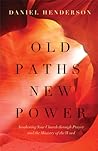
Old Paths New Power

Old Paths, New Power: Awakening Your Church through Prayer and the Ministry of the WordOld Paths, New Power: Awakening Your Church through Prayer and the Ministry of the Word by Daniel Henderson

My rating: 4 of 5 stars

This was an extremely encouraging, challenging book. In summary, Henderson is calling the church back to Acts 6:4. The leaders focus on the ministry of prayer and the word and the saints are equipped for works of ministry. The heart of this book is a call back to prayer. The Acts 6:4 model is the Old Path. No, this is not a portrait of an idyllic 1st century faith. He points out that the struggles and challenges of the church then were as difficult as they are now, but the response was very different.

Instead of evangelical celebrities, catchy vision statements and measurable outcomes formulated by CEO types, the church needs to be lead by humble, praying, biblical fed men. Once we return to this old path we will see a revival of new prayer. Henderson reminds us we do not plan and promote revival. Revival is a gift God sends.

Henderson includes many examples where this old path is leading to new power. The old paths of New Testament leadership (Acts 6:4) will lead to new power. And the examples cover a great sample of various types and sizes of churches. So its not personality based, location, or denomination. It is a movement of God. Henderson also includes various shorter articles ranging from John Piper and Henry Blackaby to Francis Chan and Jim Cymbala, so again we are reminded this is God working through His church.

Henderson also pushes us to get beyond the prayer meeting organ recital (Joe’s toe’s and Danny’s diabetes) to humble pleas of desperation and thanksgiving. NOTE: Henderson never says these types of prayer are not valid but prayer gatherings can be so much more. He gives a simple formula. God is worthy and I am needy. There are plenty of examples of prayer services, prayer gatherings etc. throughout the book. In the end Henderson calls us to prayer services that are Word Fed, Spirit Led and Worship Based.

This is not a book on how to grow a bigger church but a church of healthy, spiritually passionate disciples. He says “when prayer goes viral people are not excited about it ‘prayer’ but are infectious about him ‘Him’ (Jesus)”.

Lord teach us to pray

View all my reviews

Posted in Uncategorized | Leave a comment

Powerful

I have read a few books by Wilson and continue to be encouraged and challenged by his writings. This book is no exception. The title captured my attention because I always wondered, as an ordinary person what am I missing. My life does not feel supernatural. Thankfully Wilson starts by reminding us that supernatural living is not lightning and fireworks. In fact, most supernatural living takes place in ordinary days and times. He says we spend all of our time wondering when something big is going to happen when in fact (if we are a Christian) the biggest thing to happen to us already did. To be greedy for more suggest that what already happened was insufficient. Craving more and more extravagant evidences of the Spirit is an easy way to demonstrate our lack of satisfaction with the gospel of Jesus. (p 14) I needed to hear this and I would venture to say most of us do.
I should state now that this is not a critique of other streams of Christianity, an attempt to restrict the work of the Spirit or anything like that. This book gives a healthy biblical overview of how the Spirit works in the believer today. In so doing it confronts the excess as well as those who minimize the Spirits works.

Wilson works thru various areas where the Supernatural work of the Spirit is evident. In the chapter on prayer we are reminded that the power of prayer is not inherent in our words or how much we name and claim as if the power of prayer was in our control. Instead prayer is powered by the Spirit who intercedes for us and brings our prayer to the Father. For those of us who struggle Wilson outlines a few ways to prime our pump with written prayers, prayer journaling, praying Scripture etc.

Again, the power of prayer is not in us but in the one prayed to.

One chapter that really struck me was were Wilson time spent addressing where we spend our resources. An entire chapter is spent on the Blessing of Going Without. He says how can we say with integrity we want the Spirits filling when we keep going to the well of culture and worldliness. This is not a chapter on monasticism or asceticism. He does an excellent job of relating fasting to Spiritual power. He states that our need to fast from something does not mean that thing is sinful, but we are sinful. Things like food and sex are not evil but how we use and abuse them are. When we are filled with the joy of communion with God, we can say no thanks to other things.

He also says that the devil will use pain as a last resort. He knows that in pain we are more likely to call out to God so if he can sedate us with material blessings, drunk on worldly consumption he will name it and claim it for us. Our spiritual warfare happens more while watching TV, washing our car or enjoying a comfortable bed before church. That is our temptation.

The next chapter, Breaking Free from the Drama, reminds us that another area of supernatural work is in our relationships. Wilson says “when the Holy Spirit take up residence in our heart, he immediately begins renovating the place. It doesn’t matter where you placed the furniture before; he’s going to rearrange it into a home more suitable for himself.” (p123)
This does not mean we are free to start cutting out people who don’t meet our needs or live up to our expectations. In fact, he goes on to remind us that now that we belong to the King and have access to the throne it changes how we respond to relational wounds and slights. We will stop looking at people as existing to meet our needs because Christ has already meet all our needs. Now we can demonstrate the Christ and His spirit is at work in us in how we serve others.

I could go on because there is so mush good stuff in this book. In the end we are shown that through the Spirit we have all the fruits, all the gifts necessary to live a supernatural life. These are not given so we can be super-Christians but so we can participate in the magnification of Jesus (p182)

So Christian, there is nothing ordinary about you. You are created in the image of God, redeemed by the King and baptized by His Spirit into His body. Wilson concludes with helping us see that because of the Spirit we have; the Gospel, Belief, open eyes, indwelling Spirit, love poured into our hearts, assurance empowered prayer, unction, a revived church, the law written on your heart, good works to do, hope, just to name a few.

I loved this book because not only does Wilson unpack the work of the Spirit, he helps us see how this works in very practical ways. And with a pastor’s tone he helps us realize this is a lifelong work, and we will get there.

Posted in Uncategorized | Leave a comment